
Chrome Remote Desktop vs HopToDesk
Chrome Remote Desktop is a basic remote access tool from Google that allows users to remotely access and control a device over the internet using the Chrome browser or a Chromebook. Users must sign in to their Google account to setup remote desktop access.
Where HopToDesk fits
Chrome Remote Desktop is free and simple, and it suits personal use well. HopToDesk covers the same ground without requiring a Google account or a browser, and adds the pieces a support team needs: file transfer, chat, unattended access, and a Dashboard for managing devices and tickets.
Chrome Remote Desktop and HopToDesk side by side
| Feature | HopToDesk | Chrome Remote Desktop |
|---|---|---|
| Pricing | Free | Free |
| Use Without an Account | Yes | Not offeredGoogle Account Required |
| Access Without Port Forwarding | YesIncluded free | Yes |
| Platform Support | Windows, Mac, Linux, Android, iOS, Chromebook, Raspberry Pi | Windows, Mac, Linux, Android, iOS, Chromebook, Raspberry Pi |
| Web Browser Access | Yes | Yes |
| Single App for Control/Share | Yes | Yes |
| Screen Share | Yes | Yes |
| File Transfer | Yes | Not offered |
| Live Chat | Yes | Not offered |
| Audio Support | Yes | Yes |
| Traffic Security | End-to-End Encryption | Standard SSL |
| Secure Session Verification | Yes | Not offered |
| 2FA Login | Yes | Not offered |
| Unattended Access | Yes | Yes |
| Session Recording | Yes | Not offered |
| Remote Terminal | Yes | Not offered |
| Remote Restart | Yes | Not offered |
| Remote Printing | Yes | Not offered |
| Remote Wakeup (WOL) | Yes | Not offered |
| Privacy Mode | Yes | Not offered |
| Clipboard Sync | Yes | Yes |
| Direct Access | Yes | Not offered |
| Multi-Session Support | Yes | Yes |
| Multi-Monitor Support | Yes | Yes |
| Self-Hosting / On-Premise | Yes | Not offered |
| Custom-Branded Clients | Yes | Not offered |
| AI Agent Support (MCP) | Yes | Not offered |
| Built-in Help Desk & Ticketing | YesIncluded on all plans, with a customer portal, email intake and assignment | Not offered |
| Device Monitoring & Alerts | Yes | Not offered |
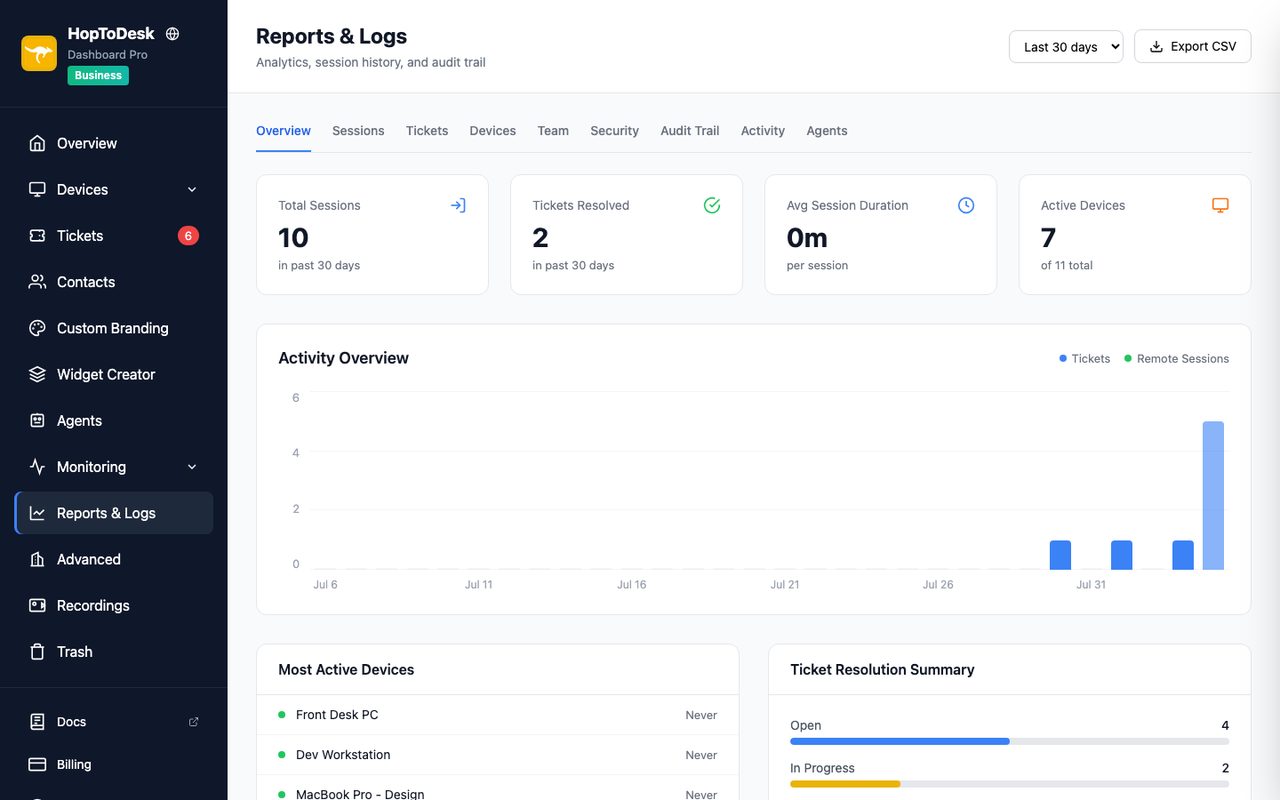
| Session Reports & Audit Trail | YesSession history, connection durations, audit trail, CSV export | Not offered |
| Session Notes & Billable Flag | Yes | Not offered |
| Language Support | About 44 | About 50 |
Chrome Remote Desktop plan details verified 5 August 2026 against Chrome Remote Desktop pricing. Vendors change packaging, so check current terms before deciding.
What the Dashboard adds
The HopToDesk client is free. The Dashboard is the paid tier, and it turns remote access into a managed platform, from your first three devices free to 500 and beyond on the Business plan.
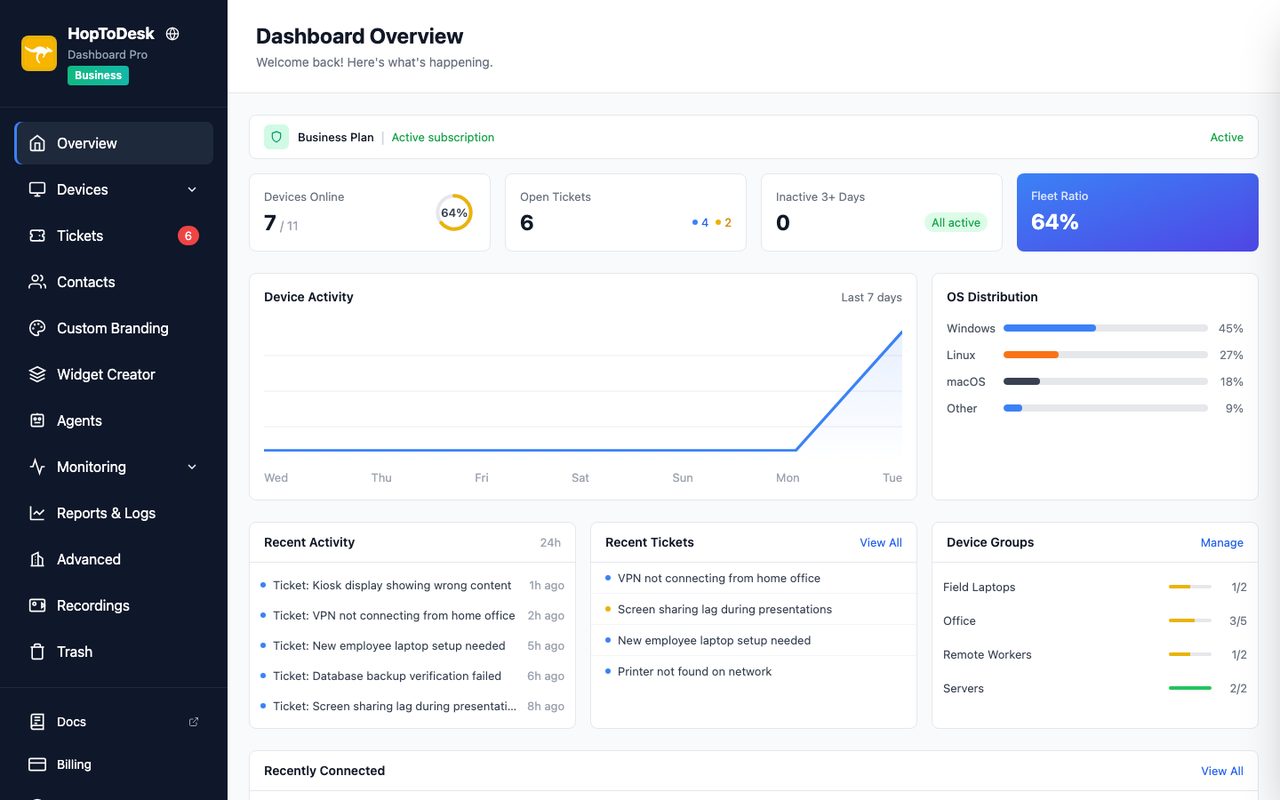
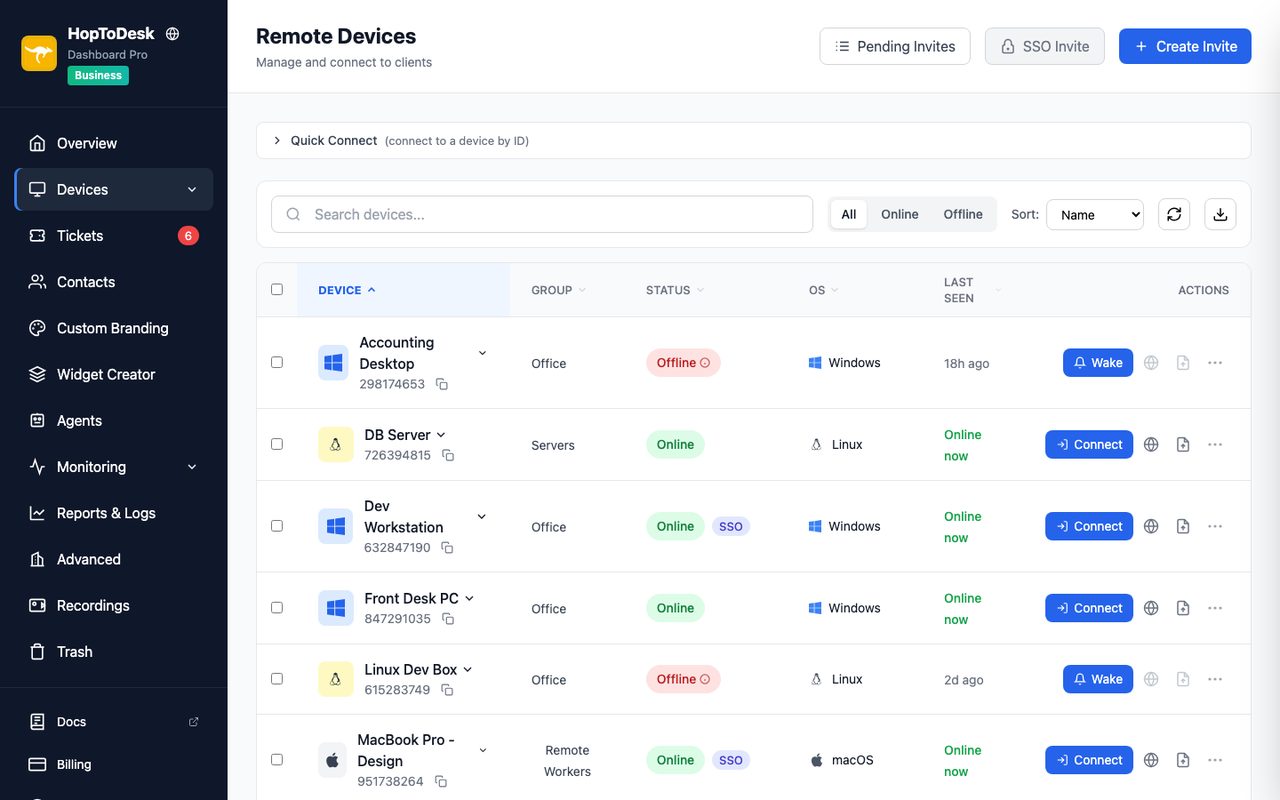
Switching from Chrome Remote Desktop
- Install the free HopToDesk client on the machines you reach today. No Google account is involved.
- Connect once to confirm performance, then create a free Dashboard account for the first three devices.
- Deploy across the fleet with GPO, Intune, SCCM, Jamf or Ansible when you are ready.
- Add your team and set roles from the Dashboard.
On the Business plan you can also import the device list exported from your current tool. Each imported group becomes a deployment with its own enroll link, and the Dashboard checks off each machine as it enrolls, so you always know what is left to move. Read the migration guide
Common questions
Do I need a Google account?
No. HopToDesk needs no account at all to connect, and the Dashboard account is separate from any Google identity.
Does it work outside the browser?
Yes. HopToDesk is a native app on Windows, Mac, Linux, Android, iOS, Chromebook and Raspberry Pi, and there is a web client if you prefer a browser.
Can I transfer files?
Yes. File transfer, live chat and audio are built into the session.
Try it on your own devices
Install the client, add a few devices and see how it handles your estate before you move anything across.
Managing devices for clients? HopToDesk for MSPs covers multi-tenant separation, per-tenant branding and volume pricing.